
The Complete Canadian Meat Buyer's Handbook (2026 Edition)
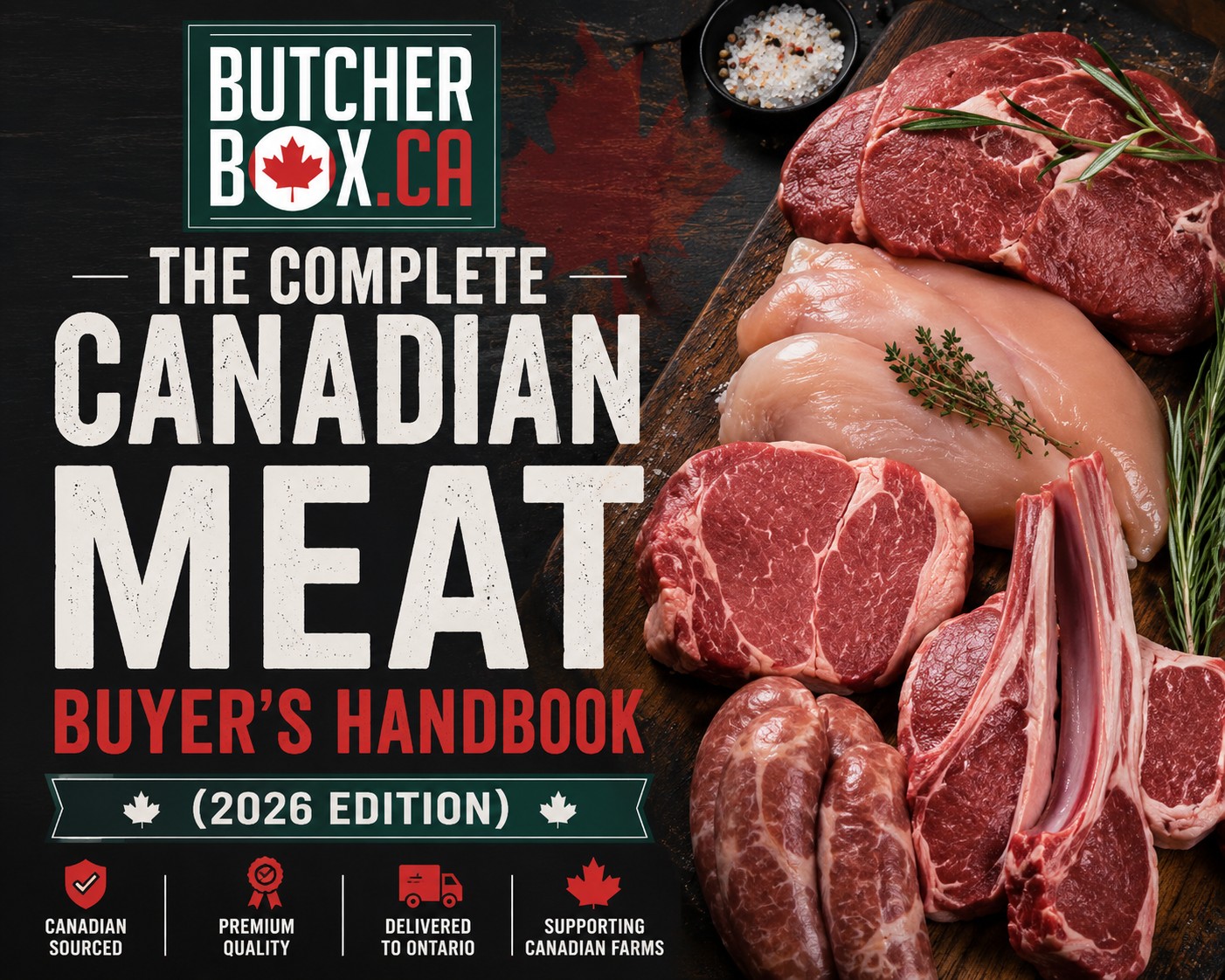
Your Ultimate Guide to Buying Better Beef, Chicken, Pork, Lamb & Seafood in Canada
Buying meat today is about more than simply choosing what's on sale. Canadian shoppers are increasingly interested in where their food comes from, how it was raised, how it was processed, and whether it offers good value for their families.
Whether you're stocking your freezer, planning a backyard barbecue, meal prepping for the week, or looking for premium meat delivered to your door in Ontario, this guide explains everything you need to know.
At ButcherBox.ca, we work with trusted Canadian suppliers to offer premium-quality meats delivered across Ontario. Every week we answer questions from customers about beef grades, grass-fed beef, air-chilled chicken, freezer storage, and cooking tips. This guide brings those answers together in one comprehensive resource.
Table of Contents
- Understanding Canadian Meat Labels
- Canadian Beef Grades Explained
- Grass-Fed vs Grain-Fed Beef
- Air-Chilled vs Water-Chilled Chicken
- Canadian Pork Guide
- Lamb Buying Guide
- Seafood Buying Guide
- Fresh vs Frozen Meat
- Vacuum-Sealed Meat Explained
- Buying Meat Online in Canada
- Building the Perfect Home Freezer
- Safe Meat Storage
- Safe Cooking Temperatures
- Meat Buying by Budget
- Meat Buying by Lifestyle
- Frequently Asked Questions
Understanding Canadian Meat Labels
Walking through a grocery store or browsing an online butcher, you'll see dozens of terms used to describe meat products. Understanding these labels helps you make informed purchasing decisions.
Common Canadian meat labels include:
- AAA Beef
- Prime Beef
- Grass-Fed
- Grass-Finished
- Air-Chilled Chicken
- Raised Without Antibiotics
- Ocean Wise® Seafood
- Product of Canada
- Free Range
- Free Run
- Vacuum Sealed
While marketing terms can vary, reputable retailers should clearly explain what each claim means.
Canadian Beef Grades Explained
Canada uses nationally recognized grading standards to evaluate beef quality.
Prime
Prime represents the highest level of marbling and tenderness. It is generally served in premium restaurants and specialty butcher shops.
Best for:
- Special occasions
- Steak lovers
- Dry-aging
AAA
AAA beef offers excellent marbling, tenderness, and flavour while providing outstanding value.
Ideal for:
- Ribeye
- Striploin
- T-Bone
- Sirloin
- BBQ steaks
Most premium steaks sold through ButcherBox.ca are carefully selected to meet high-quality expectations.
AA
Leaner than AAA.
Suitable for:
- Everyday meals
- Roasts
- Slow cooking
A
The leanest commonly available grade.
Often best used for:
- Ground beef
- Stews
- Chili
One of Canada's most common meat questions is whether grass-fed beef is better.
Typically offers:
- Leaner meat
- Rich beef flavour
- Higher omega-3 levels
- More conjugated linoleic acid (CLA)
- Firmer texture
Grass-finished cattle remain on pasture throughout their lives.
Many customers choose 100% grass-fed and grass-finished beef for its distinctive flavour profile and natural production practices.
Grain-Fed Beef
Usually provides:
- Greater marbling
- Buttery texture
- Softer fat
- Consistent tenderness
There is no single "best" choice—it depends on your taste, cooking style, and preferences.
Air-Chilled vs Water-Chilled Chicken
Air-chilled chicken has become increasingly popular among Canadian home cooks.
Advantages include:
- Better flavour
- Crispier skin
- Less retained water
- Better browning
- No added water absorption during processing
Many customers notice less shrinkage during cooking because the chicken retains its natural texture.
Water-Chilled Chicken
Traditionally processed by cooling birds in cold water.
This method is common and safe but may result in additional surface moisture.
Popular pork cuts include:
Lean and cooks quickly.
Excellent for grilling.
Perfect for pulled pork.
Pork Belly
Ideal for slow roasting and smoking.
Side Bacon
A Canadian breakfast favourite.
Canadian lamb continues to grow in popularity.
Popular cuts include:
- Rack of lamb
- Lamb chops
- Leg of lamb
- Lamb shoulder
- Ground lamb
Grass-fed lamb offers rich flavour and works beautifully with herbs like rosemary, garlic, thyme, and mint.
When purchasing seafood, consider:
- Sustainability
- Freshness
- Proper storage
- Responsible harvesting
Popular choices include:
Choose responsibly sourced seafood whenever possible.
Fresh vs Frozen Meat
Frozen meat often gets an unfair reputation.
In reality:
- Properly frozen meat retains excellent quality.
- Nutritional value remains nearly identical.
- Vacuum sealing helps reduce freezer burn.
- Buying frozen allows you to stock up during promotions.
For many families, frozen premium meat offers the best combination of convenience and value.
Why Vacuum-Sealed Meat Is Better
Vacuum sealing helps:
- Protect freshness
- Reduce freezer burn
- Extend freezer life
- Minimize oxidation
- Improve portion control
It's one of the reasons premium online butchers use individually sealed portions.
Ordering meat online has become increasingly popular because it offers convenience, product transparency, and access to premium cuts that may not always be available at local stores.
Before placing an order, consider:
- Product sourcing
- Beef grade
- Packaging quality
- Delivery area
- Shipping schedule
- Customer reviews
- Return policy
At ButcherBox.ca, customers can browse a wide range of premium meats, including beef, chicken, pork, lamb, seafood, and pantry essentials, with delivery throughout much of Ontario. Explore the full selection here:
https://butcherbox.ca/our-meats.html
Building the Perfect Home Freezer
A well-stocked freezer makes meal planning easier.
A balanced selection might include:
Beef
Pork
- Pork chops
- Tenderloin
- Bacon
- Salmon
- Shrimp
Ground meat:
1–2 days
Fresh chicken:
1–2 days
Steaks:
3–5 days
Roasts:
3–5 days
Freezer
Ground beef:
3–4 months
Steaks:
6–12 months
Chicken:
9–12 months
Pork:
6–12 months
Seafood:
3–12 months depending on the variety
Safe Internal Cooking Temperatures
Always verify doneness with a digital meat thermometer.
|
Meat |
Minimum Internal Temperature* |
|
63°C (145°F) with a rest |
|
|
Beef roasts |
63°C (145°F) with a rest |
|
Ground beef |
71°C (160°F) |
|
71°C (160°F) |
|
|
74°C (165°F) |
|
|
Turkey |
74°C (165°F) |
|
Lamb |
63°C (145°F) with a rest |
|
Seafood |
70°C (158°F) or until opaque |
*Always follow the latest guidance from Canadian food safety authorities.
Meat Buying by Budget
Budget-Friendly
- Ground beef
- Chicken thighs
- Pork shoulder
- Whole chicken
Mid-Range
- Striploin
- Sirloin
- Pork tenderloin
- Salmon
Premium
- Ribeye
- Filet mignon
- Rack of lamb
- Premium seafood
Meat Buying by Lifestyle
- Chicken breast
- Lean beef
- Ground turkey
- Ground beef
- Whole chicken
- Pork loin
Slow Cooking
- Chuck roast
- Brisket
- Pork shoulder
- Lamb shanks
Is frozen meat lower quality than fresh?
No. When frozen promptly and stored correctly, meat retains its flavour, texture, and nutritional value very well.
What does AAA beef mean?
AAA is a Canadian beef grade that indicates a high level of marbling, tenderness, and eating quality.
Is Prime beef always better than AAA?
Prime generally has more marbling, but many home cooks find AAA beef offers excellent flavour and value for everyday meals.
What is grass-finished beef?
Grass-finished cattle eat grass and forage throughout their lives rather than being grain-finished before processing.
Why choose air-chilled chicken?
Air-chilled chicken is valued for its natural flavour, crispier skin, and reduced moisture retention.
How long does vacuum-sealed meat last?
Vacuum sealing extends shelf life compared with traditional packaging, but storage times depend on refrigeration, freezing, and the specific product.
Is ordering meat online safe?
Yes. Reputable online butchers use insulated packaging and temperature-controlled delivery methods to help keep products safe during transit.
Should I buy in bulk?
Buying larger quantities can reduce shopping trips, make meal planning easier, and often provides better value if you have adequate freezer space.
What is the best steak for grilling?
Ribeye is prized for its marbling and rich flavour, while striploin and sirloin are also popular choices.
How can I tell if meat has gone bad?
Signs include an unpleasant odour, slimy texture, unusual discoloration, or damaged packaging. If in doubt, discard the product.
Is vacuum-sealed meat supposed to have a slight odour when opened?
A mild odour immediately after opening can occur due to the lack of oxygen in the package and typically dissipates after a few minutes. A persistent foul smell is a sign the product should not be used.
Does freezing kill bacteria?
Freezing stops bacterial growth but does not eliminate bacteria. Safe handling, thawing, and proper cooking remain essential.
Can I refreeze thawed meat?
If meat was thawed safely in the refrigerator and has not been left at unsafe temperatures, it can generally be refrozen, although some quality may be lost.
Which meats are best for meal prep?
Chicken breasts, lean ground beef, pork tenderloin, and salmon are popular choices because they portion well and reheat effectively.
What should I look for when choosing an online butcher?
Look for clear sourcing information, transparent product descriptions, quality packaging, reliable delivery, and consistently positive customer reviews.
Final Thoughts
Choosing quality meat doesn't have to be complicated. By understanding Canadian grading systems, production methods, storage practices, and cooking recommendations, you can shop with greater confidence and get more value from every purchase.
Whether you're filling your freezer for the month, planning your next barbecue, or looking for premium meats delivered to your home, taking the time to understand what you're buying makes a noticeable difference.
At ButcherBox.ca, we're committed to helping Ontario families enjoy premium-quality beef, chicken, pork, lamb, and seafood with transparent sourcing, convenient delivery, and dependable service. Browse our complete selection at https://butcherbox.ca/our-meats.html and explore our Learning Hub for more Canadian meat guides, cooking tips, and expert buying advice.