The Complete Guide to Thawing Meat Safely: Best Practices for Beef, Chicken, Pork, and Seafood
Whether you're planning a weeknight dinner or preparing for a weekend barbecue, properly thawing meat is one of the most important steps in safe food preparation. Thawing meat the right way helps preserve texture, flavour, and quality while preventing harmful bacteria from multiplying.
At ButcherBox.ca, we deliver premium grass-fed beef, air-chilled chicken, premium pork, and sustainably sourced seafood throughout Southern Ontario. Knowing how to thaw your meat safely ensures you get the best possible results from every order.
Why Proper Thawing Matters
Frozen meat can remain safe indefinitely when stored at 0°F (-18°C) or below, but once thawing begins, bacteria can grow if the meat is left at unsafe temperatures.
Improper thawing can lead to:
- Uneven cooking
- Loss of moisture
- Reduced flavour
- Poor texture
- Increased risk of foodborne illness
Using safe thawing methods protects both your family and the quality of your premium meats.
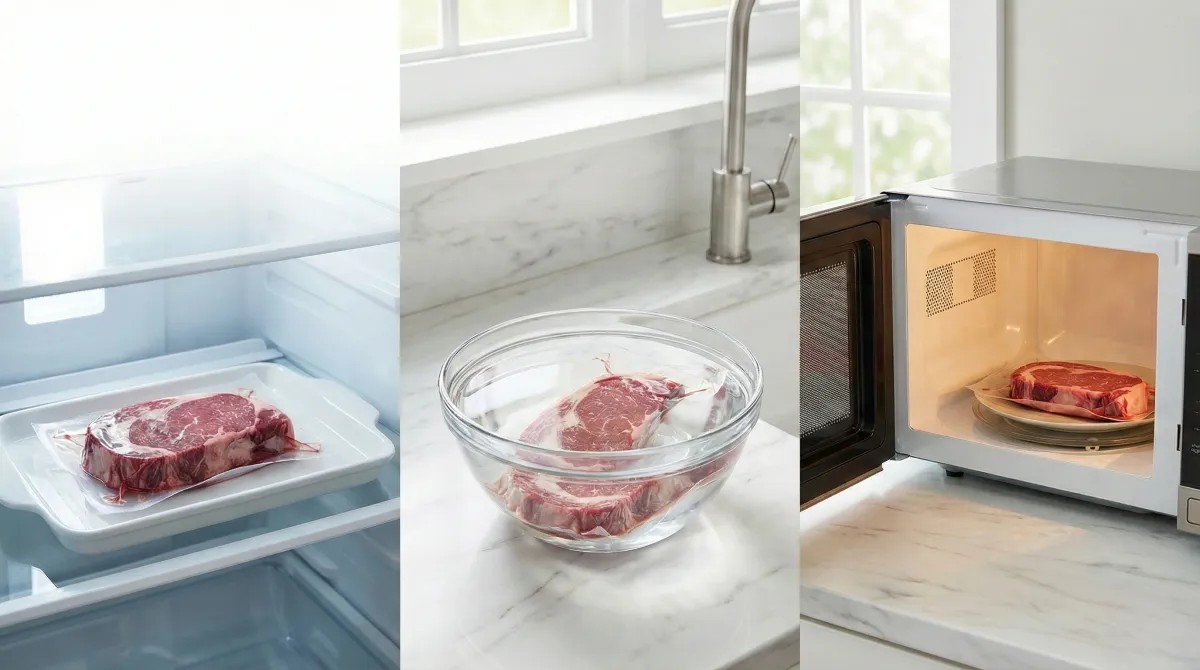
The Three Safe Ways to Thaw Meat
1. Refrigerator Thawing (Recommended)
The refrigerator is the safest and easiest method for thawing all types of meat.
Simply place the meat on a plate or tray to catch any juices and allow it to thaw slowly in the refrigerator.
Typical thawing times:
|
Product |
Refrigerator Time |
|
Chicken breasts |
12–24 hours |
|
18–24 hours |
|
|
12–24 hours |
|
|
12–24 hours |
|
|
Pork chops |
12–24 hours |
|
Roasts |
24–72 hours |
|
Whole chicken |
1–2 days |
|
Turkey |
Approximately 24 hours per 2 kg |
|
8–12 hours |
Benefits include:
- Best texture
- Maximum moisture retention
- Even thawing
- Safe temperatures throughout the process
Once thawed in the refrigerator:
- Beef can remain refrigerated for 3–5 days.
- Pork can remain refrigerated for 3–5 days.
- Chicken should be cooked within 1–2 days.
- Seafood should be cooked within 1–2 days.
2. Cold Water Thawing
Need dinner sooner?
Cold water thawing is much faster while still being safe.
Steps:
- Keep the meat in its original sealed packaging or place it in a leak-proof freezer bag.
- Submerge completely in cold tap water.
- Change the water every 30 minutes.
- Cook immediately after thawing.
Approximate thawing times:
|
Product |
Cold Water Time |
|
Chicken breasts |
1 hour |
|
Ground beef |
1 hour |
|
Steaks |
30–60 minutes |
|
Pork chops |
1 hour |
|
Small roast |
2–3 hours |
Never use warm or hot water, as it can allow bacteria to grow on the surface before the centre has thawed.
3. Microwave Thawing
Microwave thawing is best when you're cooking immediately afterward.
Because microwaves thaw unevenly, some areas may begin cooking while others remain frozen.
If using the microwave:
- Use the defrost setting.
- Rotate the meat if possible.
- Cook immediately after thawing.
- Never refreeze microwave-thawed meat unless it has been fully cooked first.
Never Thaw Meat on the Counter
Leaving frozen meat on the kitchen counter may seem convenient, but it is not safe.
The outside of the meat can quickly enter the "danger zone" between 4°C and 60°C, where bacteria multiply rapidly, while the centre remains frozen.
Avoid thawing meat:
- On the countertop
- In warm water
- In direct sunlight
- In the garage during warmer months
- Outdoors
These methods increase the risk of foodborne illness.
Can You Cook Meat From Frozen?
Yes—in many cases.
Many cuts of meat can be cooked safely from frozen, although cooking times will increase by approximately 50%.
Products that cook well from frozen include:
Larger items like roasts, whole chickens, or turkeys should always be thawed before cooking for more even results.
Always verify doneness with a meat thermometer.
Can You Refreeze Thawed Meat?
It depends on how it was thawed.
If the meat thawed in the refrigerator and has remained below 4°C, it is generally safe to refreeze, although some moisture and texture may be lost.
If the meat was thawed using cold water or the microwave, it should be cooked before refreezing.
Tips for Maintaining Quality
Premium meat deserves proper handling.
To preserve freshness:
- Freeze meat as soon as possible after delivery if not using it immediately.
- Keep freezer temperatures at -18°C or below.
- Label packages with the freezing date.
- Use airtight packaging to prevent freezer burn.
- Store heavier packages at the bottom of the freezer.
- Avoid repeated thawing and refreezing.
How long does frozen meat last?
While frozen meat remains safe indefinitely at proper freezer temperatures, quality is best when used within:
- Beef: 6–12 months
- Chicken: 9–12 months
- Pork: 4–6 months
- Seafood: 3–6 months
Can vacuum-sealed meat be thawed in its packaging?
Yes. Vacuum-sealed packaging is ideal for refrigerator and cold water thawing.
Why does thawed meat sometimes release liquid?
Some moisture loss is normal during thawing. Premium air-chilled chicken and properly aged beef generally retain more moisture than conventionally processed meat.
Is frozen meat less nutritious?
No. Freezing preserves nutrients exceptionally well. Properly frozen meat maintains virtually all of its protein, vitamins, and minerals.
What's the safest thawing method?
Refrigerator thawing remains the safest method because it keeps meat at a consistently safe temperature while preserving texture and flavour.
Enjoy Better Meals with Premium Meat from ButcherBox.ca
Starting with high-quality meat makes every meal better, and proper thawing ensures you enjoy that quality from freezer to table.
At ButcherBox.ca, we proudly deliver grass-fed beef, premium pork, air-chilled chicken, wild-caught seafood, and chef-quality meats throughout Southern Ontario. By following safe thawing practices, you'll maximize flavour, maintain food safety, and get the very best from every order.
To build your meat-cooking knowledge, be sure to read:
- The Ultimate Guide to Safe Meat Cooking Temperatures in Canada
- Safe Chicken Cooking Guide
- Safe Beef Cooking Guide
- Safe Pork Cooking Guide
- Why Air-Chilled Chicken Tastes Better
- The Complete Guide to Using a Meat Thermometer
- Beef Encyclopedia
Whether you're stocking your freezer or planning your next family dinner, proper thawing is the first step toward delicious, safe, and perfectly cooked meals.