Canadian Roasting Guide (2026 Edition): The Ultimate Guide to Roasting Beef, Pork, Chicken, Turkey & Lamb in Canada
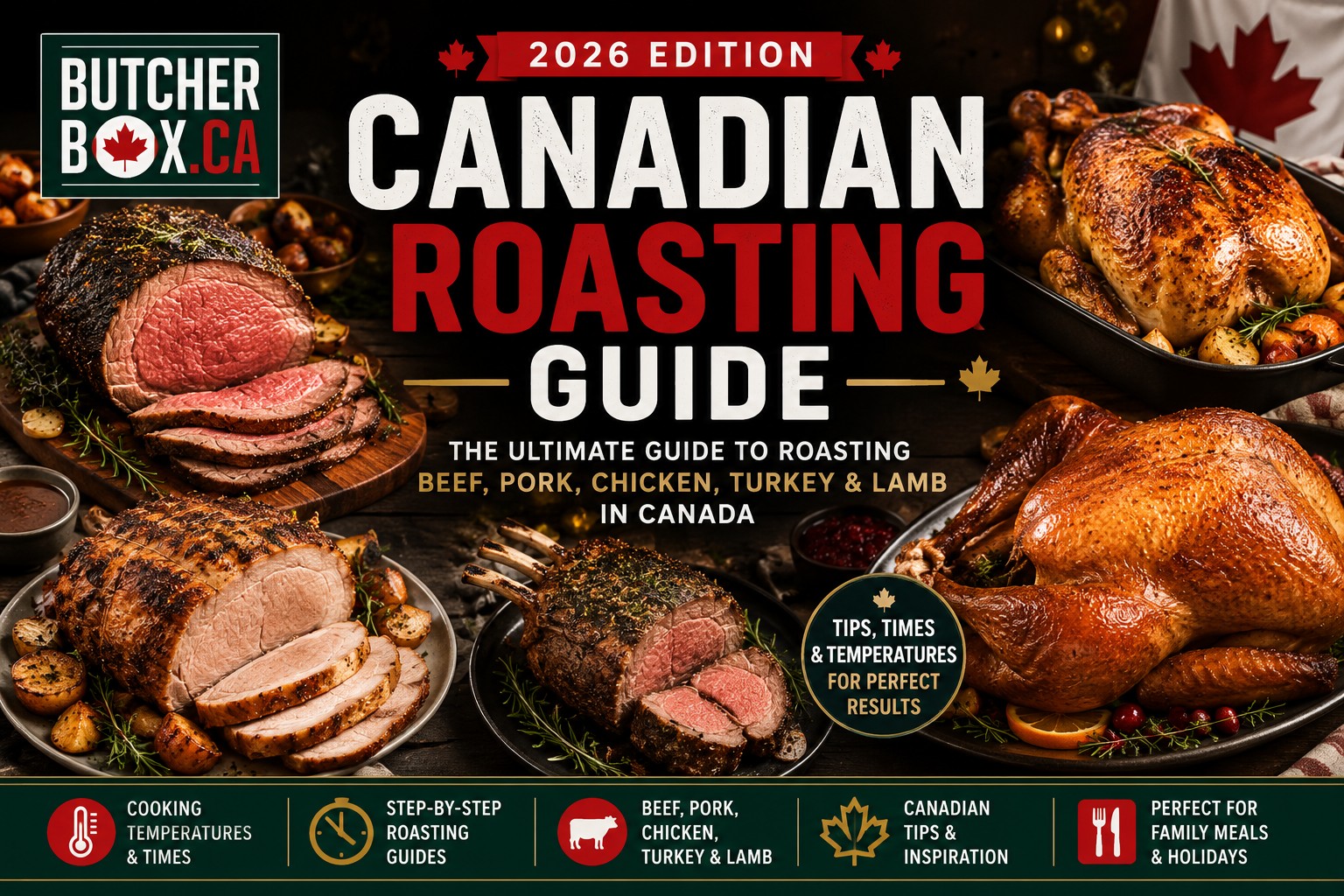
Roasting is one of Canada's favourite cooking methods for family dinners, holiday meals, Sunday suppers, and special occasions. Whether you're preparing a perfectly browned roast beef, a juicy whole chicken, a tender pork loin, or a holiday turkey, mastering roasting techniques ensures consistently delicious results.
This comprehensive Canadian Roasting Guide covers everything you need to know about selecting the right roast, cooking temperatures, timing, food safety, carving, storage, and reheating. Whether you're a beginner or an experienced home cook, this guide will help you roast with confidence.
At ButcherBox.ca, we proudly deliver premium Canadian meats—including 100% grass-fed and grass-finished beef, premium AAA beef, air-chilled chicken, premium pork, grass-fed lamb, and sustainably sourced seafood—directly to homes across Ontario.
Why Roasting Remains One of Canada's Favourite Cooking Methods
Roasting offers several advantages:
- Even cooking
- Rich caramelized flavour
- Tender, juicy meat
- Minimal hands-on preparation
- Excellent leftovers
- Ideal for meal prep
- Perfect for entertaining
- Suitable for all experience levels
Roasting also allows natural flavours to shine without requiring complicated techniques.
Best Meats for Roasting
Excellent roasting cuts include:
- Prime Rib
- Rib Roast
- Striploin Roast
- Sirloin Roast
- Top Sirloin Roast
- Tenderloin Roast
- Eye of Round
- Inside Round
- Outside Round
Premium Canadian beef develops exceptional flavour when roasted slowly.
Popular roasting cuts include:
- Pork Loin Roast
- Pork Shoulder
- Pork Leg Roast
- Pork Rib Roast
- Pork Tenderloin
Pork offers incredible versatility for everyday family meals.
Perfect roasting options include:
- Whole Chicken
- Split Chicken
- Bone-in Chicken Breasts
- Whole Legs
Air-chilled chicken produces crispier skin and richer flavour during roasting.
Turkey
Ideal for:
- Holiday dinners
- Thanksgiving
- Christmas
- Meal prep
- Large family gatherings
Lamb
Popular roasting cuts include:
- Leg of Lamb
- Rack of Lamb
- Shoulder Roast
- Lamb Loin
Grass-fed lamb develops outstanding flavour when roasted properly.
Choosing the Right Roast Size
A general guideline is:
- ½ lb (225 g) per person for boneless roasts
- ¾–1 lb (340–450 g) per person for bone-in roasts
For leftovers, consider purchasing a slightly larger roast.
Preparing Your Roast
Before roasting:
- Remove meat from the refrigerator 30–60 minutes before cooking (larger roasts may need slightly longer).
- Pat dry with paper towels.
- Season generously with salt and pepper.
- Add herbs such as rosemary, thyme, parsley, or garlic.
- Lightly coat with olive oil or butter if desired.
- Preheat the oven fully before cooking.
Proper preparation promotes even cooking and better browning.
Recommended Oven Temperatures
Most roasts cook well between:
- 300°F (149°C) – Slow roasting
- 325°F (163°C) – Traditional roasting
- 350°F (177°C) – Most common
- 375°F (190°C) – Smaller roasts
- 425°F (218°C) – Initial browning
Choose the temperature based on the cut, size, and desired finish.
Safe Internal Cooking Temperatures
Always verify doneness using a meat thermometer inserted into the thickest part of the meat.
|
Meat |
Safe Internal Temperature |
|
Beef (medium-rare) |
135°F (57°C) |
|
Beef (medium) |
145°F (63°C) |
|
145°F (63°C) with a rest |
|
|
165°F (74°C) |
|
|
Turkey |
165°F (74°C) |
|
Lamb |
145°F (63°C) for medium |
Rest meat after roasting to allow juices to redistribute and to account for carryover cooking.
Estimated Roasting Times
Cooking times vary by roast size, oven performance, and desired doneness.
|
Meat |
Approximate Time |
|
Beef Roast |
15–25 minutes per pound |
|
Pork Loin |
20–25 minutes per pound |
|
Whole Chicken |
20 minutes per pound plus about 15 minutes |
|
Turkey |
13–15 minutes per pound (unstuffed) |
|
Leg of Lamb |
20–30 minutes per pound |
Use these as estimates and rely on internal temperature rather than time alone.
Should You Cover a Roast?
Covering with foil can help retain moisture during portions of cooking, while uncovering toward the end encourages browning. The ideal approach depends on the cut and desired crust.
The Importance of Resting Meat
Resting is one of the most overlooked steps.
Recommended rest times:
- Beef: 15–20 minutes
- Pork: 10–15 minutes
- Chicken: 10–15 minutes
- Turkey: 30–45 minutes
- Lamb: 15–20 minutes
Skipping this step can result in more juices escaping during carving.
Carving Tips
For the best texture:
- Use a sharp carving knife.
- Slice against the grain for beef and pork.
- Remove poultry legs and wings before slicing the breast.
- Carve lamb into even slices for consistent servings.
Common Roasting Mistakes
Avoid these frequent errors:
- Not preheating the oven
- Skipping the meat thermometer
- Overcooking lean cuts
- Carving immediately after cooking
- Under-seasoning
- Opening the oven too often
- Using a pan that is too small
- Ignoring carryover cooking
Roasting vs. Baking
Although both use dry heat, roasting is generally associated with cooking meats at temperatures that encourage browning and caramelization, while baking is more commonly used for breads, pastries, and casseroles.
Storing Leftovers
After serving:
- Refrigerate leftovers within two hours.
- Store in airtight containers.
- Use refrigerated leftovers within 3–4 days.
- Freeze for longer storage if needed.
Proper storage helps maintain quality and food safety.
Reheating Roasted Meat
To help preserve moisture:
- Reheat gently in the oven with a splash of broth or stock.
- Cover loosely with foil.
- Avoid overheating, which can dry out the meat.
What is the best oven temperature for roasting beef?
A temperature between 325°F and 350°F works well for many beef roasts, though lower temperatures can provide more even cooking for larger cuts.
Should I roast meat covered or uncovered?
Many roasts benefit from cooking uncovered to develop a browned exterior. Some larger or leaner cuts may benefit from being covered for part of the cooking time.
Do I need a meat thermometer?
Yes. A meat thermometer is the most reliable way to determine doneness and food safety.
Can I roast frozen meat?
For the most even cooking and best quality, thaw meat safely in the refrigerator before roasting.
Why should I let meat rest?
Resting allows juices to redistribute throughout the meat, resulting in a juicier roast and cleaner slices.
What herbs pair best with roasted meats?
Popular choices include rosemary, thyme, sage, parsley, oregano, garlic, and black pepper. Different meats pair well with different herb combinations.
What's the difference between a convection oven and a conventional oven?
Convection ovens circulate hot air with a fan, often cooking food faster and promoting more even browning. Check your appliance manual and adjust cooking times as needed.
Why Choose ButcherBox.ca for Your Next Roast?
A great roast starts with high-quality meat. At ButcherBox.ca, we carefully source premium Canadian meats to help home cooks achieve exceptional results.
Our selection includes:
- 100% grass-fed and grass-finished beef
- Premium AAA Canadian beef
- Air-chilled chicken
- Premium pork
- Grass-fed lamb
- Sustainably sourced seafood
Whether you're preparing a holiday feast or a Sunday family dinner, having quality ingredients makes every roast more enjoyable.
Browse our full collection of premium meats at https://butcherbox.ca/ and discover roasts that are ideal for your next meal.
Roasting is a timeless cooking technique that delivers impressive results with minimal effort. By choosing the right cut, seasoning thoughtfully, monitoring internal temperature with a meat thermometer, and allowing the meat to rest before carving, you can consistently prepare tender, flavourful meals.
Use this Canadian Roasting Guide as your year-round reference for roast beef, pork, chicken, turkey, and lamb, and return to it whenever you're planning a family dinner, holiday celebration, or weekend gathering.