The Ultimate Canadian Cooking Tips Guide (2026 Edition)
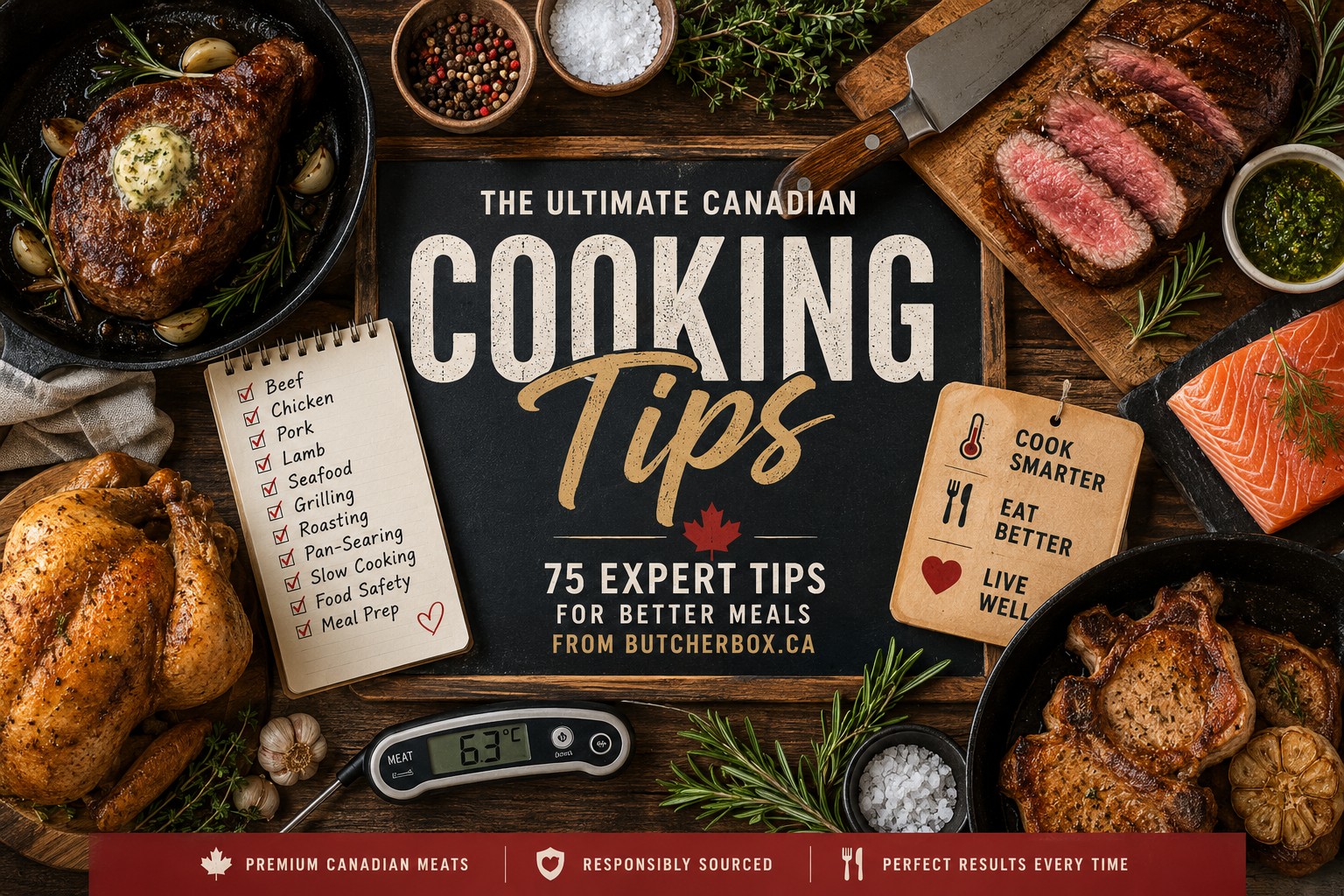
Great Meals Start with Great Ingredients
Anyone can follow a recipe, but consistently cooking restaurant-quality meals at home comes down to understanding a few essential techniques.
Whether you're preparing a perfectly grilled steak, juicy air-chilled chicken, tender pork chops, or sustainable Canadian seafood, the right cooking methods make all the difference.
At ButcherBox.ca, we believe premium meat deserves premium preparation. This guide brings together decades of cooking wisdom into one complete Canadian resource.
Tip #1: Start With Quality Meat
The biggest cooking secret isn't seasoning.
It's the quality of the meat.
Premium meat typically offers:
- Better marbling
- Better flavour
- More consistent cooking
- Better texture
- Less moisture loss
Starting with premium Canadian meat means you'll naturally produce better meals.
Tip #2: Always Read the Entire Recipe First
Many cooking mistakes happen because people discover an ingredient or step too late.
Before turning on the stove:
- Read everything
- Gather ingredients
- Measure spices
- Prepare vegetables
- Preheat equipment
Professional chefs call this mise en place.
Tip #3: Let Meat Warm Slightly Before Cooking
Very cold meat cooks unevenly.
Allow steaks and roasts to sit for approximately:
- Steaks: 20–30 minutes
- Roasts: 45–60 minutes
Never leave raw meat at room temperature for extended periods.
Tip #4: Dry Meat Before Cooking
Pat meat dry using paper towels.
Removing surface moisture creates:
- Better browning
- Better crust
- Improved caramelization
- Crispier chicken skin
Tip #5: Season Generously
Salt isn't just flavour.
It also improves:
- Texture
- Moisture retention
- Browning
Season beef, pork and lamb well before cooking.
Tip #6: Invest in a Meat Thermometer
Guessing is the fastest way to overcook expensive meat.
Cook by internal temperature—not by time.
Safe temperatures include:
|
Meat |
Internal Temperature |
|
74°C (165°F) |
|
|
Turkey |
74°C (165°F) |
|
Ground meats |
71°C (160°F) |
|
63°C (145°F) with rest |
|
|
Based on preferred doneness |
A digital instant-read thermometer is one of the best kitchen investments you can make.
Tip #7: Preheat Your Pan
A cold pan prevents proper searing.
Heat first.
Then add oil.
Then cook.
Tip #8: Don't Overcrowd the Pan
Crowding lowers cooking temperature.
Instead of browning, food begins steaming.
Cook in batches when necessary.
Tip #9: Leave Meat Alone
Constant flipping prevents crust formation.
Allow meat to naturally release before turning.
Tip #10: Rest Meat Before Cutting
Resting allows juices to redistribute.
Suggested resting times:
- Steak: 5–10 minutes
- Chicken breasts: 5 minutes
- Pork chops: 5–8 minutes
- Roasts: 15–30 minutes
Tips for Cooking Beef
Different cuts serve different purposes.
- Ribeye → grilling
- Striploin → pan searing
- Filet Mignon → high heat
- Chuck Roast → slow cooking
- Brisket → smoking
- Short Ribs → braising
For steaks thicker than 1½ inches:
- Cook slowly in oven.
- Finish with a blazing hot sear.
The result is edge-to-edge perfection.
Cast iron delivers:
- Better crust
- Higher temperatures
- Even heat
- Excellent flavour
Air-chilled chicken contains less retained water, helping it brown more effectively and deliver richer flavour than conventionally water-chilled poultry.
Don't Overcook
Chicken dries quickly.
Cook only until safe temperature is reached.
Roast Whole Chickens Properly
High heat creates:
- Crispy skin
- Juicy meat
- Better flavour
Modern pork is leaner than ever.
Avoid overcooking.
Pork remains juicy at 63°C (145°F) followed by a short rest.
Fresh seafood cooks quickly.
General rule:
Stop cooking just before it looks fully done.
Residual heat finishes cooking perfectly.
Grilling Tips
Always:
- Clean grates
- Oil lightly
- Preheat fully
- Create hot and cool zones
- Keep the lid closed
- Avoid pressing burgers
- Flip only when ready
These simple practices promote even cooking, better grill marks, and juicier results.
Roasting Tips
Roasting works best when:
- Oven is fully preheated
- Meat sits on a rack
- Air circulates
- Internal temperature is monitored
Slow Cooking Tips
Ideal cuts include:
- Chuck roast
- Brisket
- Pork shoulder
- Short ribs
Low temperatures transform collagen into rich, tender gelatin.
Cook once.
Eat several times.
Prepare:
Freeze portions for easy weeknight meals.
Food Safety Tips
Always:
- Wash hands before handling food
- Keep raw meat separate
- Use separate cutting boards
- Refrigerate leftovers promptly
- Thaw meat safely in the refrigerator, cold water, or microwave—not on the counter.
Kitchen Tools Worth Owning
Every home cook should have:
- Digital meat thermometer
- Cast iron skillet
- Sharp chef's knife
- Cutting board
- Tongs
- Sheet pans
- Instant-read thermometer
- Dutch oven
Common Cooking Mistakes
Avoid:
- Cooking frozen steaks without a plan
- Skipping the resting period
- Overcrowding pans
- Using dull knives
- Guessing doneness
- Cooking everything on high heat
- Forgetting to preheat
What is the most important cooking tip?
Use a meat thermometer. It removes guesswork and helps you cook meat safely without overcooking.
Why should meat rest after cooking?
Resting lets juices redistribute throughout the meat, making each bite more tender and flavourful.
Should I season meat before cooking?
Yes. Salt enhances flavour and supports browning. Many cuts benefit from seasoning before they hit the heat.
Is cast iron the best pan for steak?
Cast iron retains high heat exceptionally well, producing a deep, flavourful crust.
How do I keep chicken juicy?
Cook to the recommended internal temperature and avoid overcooking. Let it rest before slicing.
Why won't my steak brown?
Excess surface moisture, a pan that isn't hot enough, or overcrowding are common causes.
Should I flip steak only once?
You can flip more than once if desired, but avoid moving the steak constantly. Let a crust develop before turning.
Is air-chilled chicken better for cooking?
Air-chilled chicken generally browns better because it retains less surface water after processing.
What oil is best for high-heat cooking?
Choose oils with high smoke points, such as avocado oil or refined canola oil.
What is the best way to improve my cooking?
Practice consistently, use quality ingredients, and rely on a thermometer rather than timing alone.
Become a Better Home Cook with ButcherBox.ca
Exceptional cooking starts with exceptional ingredients. Whether you're preparing a weeknight chicken dinner, reverse-searing a premium steak, smoking brisket, or grilling burgers for family and friends, great technique and premium Canadian meat work together to deliver outstanding results.
Explore the premium selection at https://butcherbox.ca/ and browse the growing library of recipes, meat guides, and cooking resources to continue building your kitchen confidence.