
The Ultimate Canadian Beef Encyclopedia (2026 Edition): Complete Guide to Canadian Beef, Cuts, Grades, Cooking Methods & Buying Tips
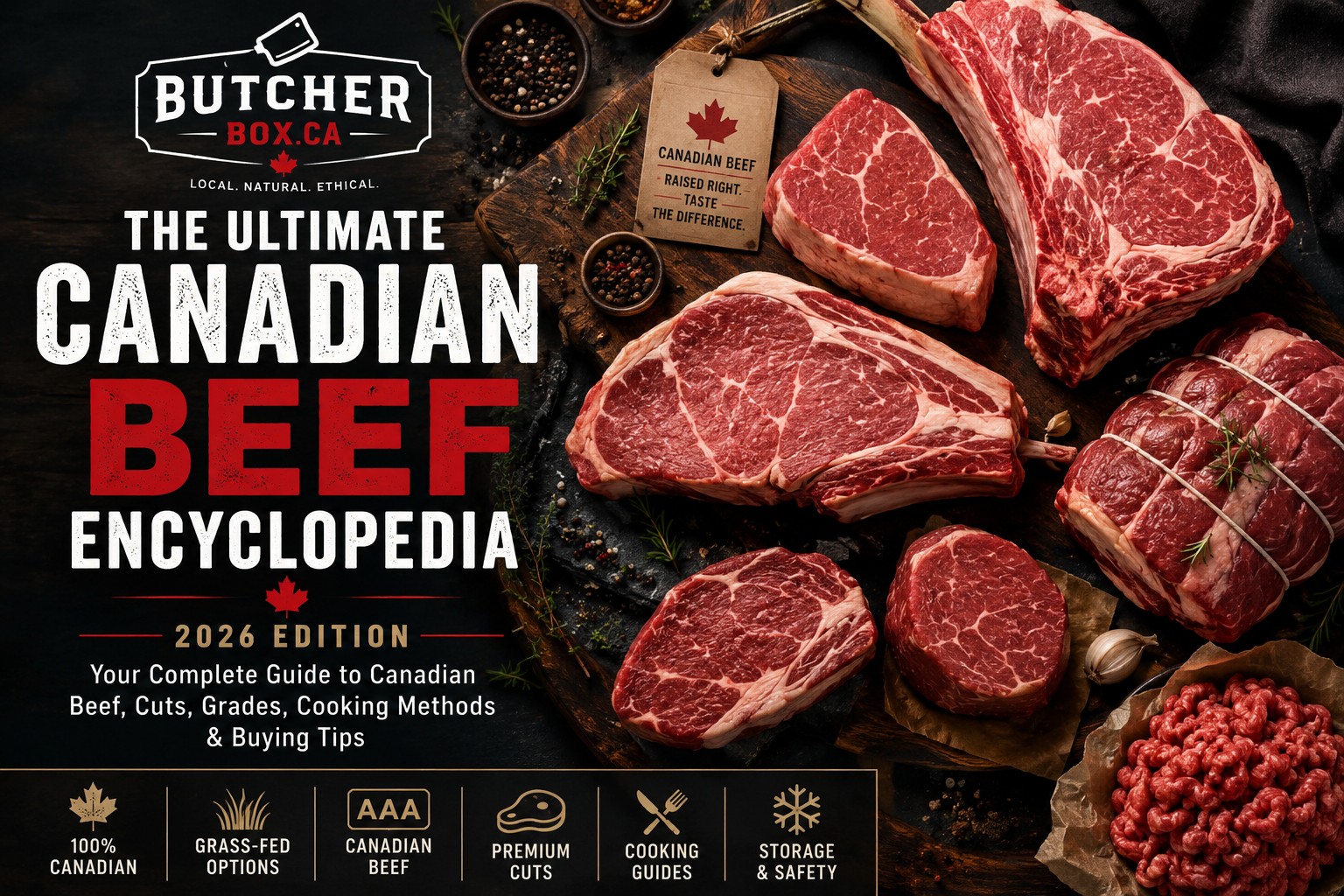
Canadian beef is recognized worldwide for its quality, food safety standards, and exceptional flavour. This guide explains Canadian beef grades, the most popular cuts, cooking temperatures, buying tips, grass-fed versus grain-fed beef, storage recommendations, and answers to frequently asked questions. Whether you're grilling ribeye, slow-cooking brisket, or shopping for premium beef online in Ontario, this encyclopedia provides everything Canadians need to know.
Canada has built a global reputation for producing some of the world's highest-quality beef. From Alberta ranches to Canadian family farms across the country, Canadian beef is recognized for its flavour, quality standards, and versatility.
Whether you are buying your first steak, preparing a backyard BBQ, stocking your freezer, or trying to understand the difference between AAA beef, grass-fed beef, and premium cuts, this Canadian Beef Encyclopedia explains everything you need to know.
This complete guide covers:
- Canadian beef grades
- Popular beef cuts
- Steak recommendations
- Grass-fed vs grain-fed beef
- Cooking methods
- Internal temperatures
- Storage tips
- Buying beef online in Canada
- Frequently asked questions
What Makes Canadian Beef Special?
Canadian beef is valued around the world because of:
1. High-Quality Production Standards
Canadian cattle producers follow strict standards focused on:
- Animal health
- Food safety
- Traceability
- Sustainable farming practices
Canada's beef industry combines modern production methods with generations of ranching expertise.
2. Premium Beef Genetics
Canadian cattle producers raise breeds known for:
- Excellent marbling
- Tenderness
- Flavour
- Consistent quality
Popular beef breeds include:
- Angus
- Hereford
- Simmental
- Charolais
- Limousin
Canada has a strong grilling tradition.
From summer backyard BBQs to holiday dinners, beef remains one of Canada's favourite proteins.
Popular Canadian beef dishes include:
- Grilled ribeye steaks
- AAA striploin steaks
- Prime rib roasts
- Beef burgers
- Slow-cooked brisket
- Braised short ribs
Understanding Canadian Beef Grades
One of the most important things to understand when buying beef is the grading system.
Canadian beef is graded based on factors including:
- Marbling
- Meat colour
- Fat distribution
- Maturity
- Texture
Canadian Beef Grades Explained
Canada Prime
Canada Prime is the highest Canadian beef grade.
Characteristics:
- Highest marbling levels
- Exceptional tenderness
- Rich flavour
- Premium steakhouse quality
Best for:
- Ribeye
- Tenderloin
- Striploin
- Special occasions
AAA Canadian Beef
AAA is one of the most popular premium beef grades in Canada.
Benefits:
- Excellent marbling
- Tender texture
- Great flavour
- Reliable cooking results
AAA beef is a favourite choice for:
- Home grilling
- BBQs
- Family dinners
- Everyday premium meals
AA Canadian Beef
AA beef offers:
- Good flavour
- Moderate marbling
- Excellent value
It is often used for:
- Roasts
- Ground beef
- Everyday cooking
AAA vs Prime Beef: What Is the Difference?
|
Feature |
AAA Beef |
Prime Beef |
|
Marbling |
High |
Very High |
|
Tenderness |
Excellent |
Exceptional |
|
Price |
Moderate Premium |
Highest Premium |
|
Best Use |
Everyday steak |
Luxury meals |
For many Canadian families, AAA beef offers the best balance between quality and value.
Grass-Fed vs Grain-Fed Beef in Canada
One of the most common questions Canadian consumers ask is:
"What is the difference between grass-fed and grain-fed beef?"
Grass-Fed Beef
Grass-fed beef comes from cattle that consume grass and forage as part of their diet.
Potential benefits:
- Distinct flavour profile
- Traditional ranching approach
- Popular among consumers seeking alternative production methods
Grass-finished beef means cattle remain on grass and forage throughout their entire lives.
Consumers choose grass-finished beef because they value:
- Production transparency
- Natural feeding practices
- Unique flavour
Grain-Fed Beef
Grain-fed beef is commonly associated with:
- Higher marbling
- Rich flavour
- Tender texture
Many premium steaks come from grain-finished cattle because marbling contributes to tenderness and juiciness.
Popular Canadian Beef Cuts Explained
Understanding beef cuts helps you choose the right steak or roast.
Best Steak for Flavour
The ribeye is famous for:
- Rich marbling
- Juicy texture
- Beefy flavour
Best cooking methods:
- Grill
- Cast iron skillet
- Reverse sear
The Classic Canadian Steak
Striploin offers:
- Great tenderness
- Balanced flavour
- Excellent grilling performance
Perfect for:
- BBQ nights
- Family dinners
The Most Tender Steak
Characteristics:
- Extremely tender
- Mild flavour
- Lean texture
Best for:
- Special occasions
- Restaurant-style meals
A great everyday steak.
Benefits:
- Good flavour
- Affordable
- Versatile
T-Bone and Porterhouse Steak
These combine:
- Tenderloin
- Striploin
Great for:
- Steak lovers
- Large servings
- BBQ entertaining
Tomahawk Steak
A dramatic bone-in ribeye.
Popular for:
- Special occasions
- BBQ presentations
- Sharing meals
Flank Steak
A lean, flavourful cut.
Best for:
- Marinades
- Fajitas
- Stir-fries
Brisket
A favourite for:
- Smoking
- Slow cooking
- BBQ
Low-and-slow cooking creates tender, flavourful results.
Ground beef is one of Canada's most popular beef products.
Common uses:
- Burgers
- Meatballs
- Tacos
- Shepherd's pie
- Pasta sauces
Look for:
- Quality sourcing
- Proper fat ratio
- Fresh or properly frozen packaging
Best Beef Cuts for Different Cooking Methods
Choose:
- Ribeye
- Striploin
- Tenderloin
- Sirloin
Best Cuts for Smoking
Choose:
- Brisket
- Short ribs
- Chuck roast
Best Cuts for Slow Cooking
Choose:
- Chuck roast
- Blade roast
- Short ribs
Best Cuts for Stir Fry
Choose:
- Flank steak
- Sirloin
- Striploin
Steak Cooking Temperatures Guide
The best way to cook steak accurately is using a meat thermometer.
|
Doneness |
|
|
Rare |
120-125°F |
|
Medium Rare |
130-135°F |
|
Medium |
140-145°F |
|
Medium Well |
150-155°F |
|
Well Done |
160°F+ |
Always allow steak to rest before slicing.
The Reverse Sear Method for Canadian Steak
Reverse searing has become one of the most popular steak techniques.
Steps:
- Slowly cook steak at low temperature
- Bring steak close to desired internal temperature
- Finish with high heat searing
- Rest before serving
Benefits:
- Even cooking
- Better crust
- Restaurant-quality results
How to Buy Beef Online in Canada
More Canadians are choosing online meat delivery because it offers:
Convenience
Order premium cuts without leaving home.
Better Selection
Access:
- Premium steaks
- Specialty cuts
- Family packages
Freezer-Friendly Options
Stock your freezer with:
- Steaks
- Ground beef
- Roasts
- Burgers
What Should You Look for When Buying Canadian Beef Online?
Choose a supplier that provides:
Clear Sourcing Information
Look for:
- Canadian beef information
- Farming practices
- Product details
Premium beef should arrive:
- Properly frozen
- Securely packaged
- Protected during delivery
Variety
A complete beef supplier should offer:
- Steaks
- Roasts
- Ground beef
- BBQ cuts
- Specialty items
Why Choose ButcherBox.ca for Canadian Beef?
ButcherBox.ca provides premium Canadian meat options including:
- AAA Canadian beef
- 100% grass-fed beef
- 100% grass-finished beef
- Premium steak cuts
- Family-sized packages
Explore Canadian beef options:
https://butcherbox.ca/our-meats.html
Refrigerator Storage
Fresh beef:
- Use within recommended dates
- Keep refrigerated below safe temperatures
Freezer Storage
Properly packaged beef can maintain excellent quality when frozen.
Tips:
- Remove excess air
- Use freezer-safe packaging
- Label packages with dates
Canadian Beef FAQ (2026)
1. What is the best beef in Canada?
The best beef depends on your preferences. Premium AAA and Prime beef are popular choices for tenderness and flavour.
2. Is Canadian beef better than imported beef?
Canadian beef is recognized globally for quality standards, traceability, and production practices.
3. What is AAA Canadian beef?
AAA Canadian beef is a premium grade known for excellent marbling, tenderness, and flavour.
4. What is the most tender steak cut?
Filet mignon is generally considered the most tender steak cut.
5. What steak has the most flavour?
Ribeye is often considered one of the most flavourful steaks because of its marbling.
6. Is grass-fed beef healthier?
Grass-fed beef is valued by many consumers for its production methods and flavour differences.
7. What is the best steak for grilling?
Ribeye, striploin, and tenderloin are excellent grilling choices.
8. How long can beef stay frozen?
Properly packaged frozen beef can maintain quality for many months.
9. Can I buy Canadian beef online?
Yes. Many Canadian companies offer online beef delivery.
10. What beef should every Canadian freezer have?
A well-stocked freezer may include:
- Ground beef
- Steaks
- Roasts
- Burgers
- Specialty cuts
Continue Reading:
- Canadian Meat Encyclopedia
- Canadian BBQ Encyclopedia
- Canadian Cooking Tips Guide
- Canadian Chicken Encyclopedia
- Canadian Seafood Guide
- Canadian Lamb Guide
- Canadian Meat Safety Guide
- Ground Meat Guide
- Buying Beef in Canada Guide
- Air-Chilled Chicken Guide
- Grass-Fed Beef Guide
- Reverse Sear Guide
- Steak Guide
- Meat Thermometer Guide
- Thawing Guide
- Safe Cooking Temperatures
- Canadian Meat Cuts
- Canadian Steak Encyclopedia
- Meat learning hub
Final Thoughts: Canada's Complete Beef Guide
Canadian beef represents quality, tradition, and versatility.
Whether you prefer a perfectly grilled AAA ribeye, a slow-smoked brisket, or grass-finished beef from Canadian producers, understanding beef helps you make better choices.
The best Canadian beef experience starts with knowing:
- The grade
- The cut
- The cooking method
- The source
With the right knowledge, every Canadian can enjoy better beef at home.