
Canadian Meat Dictionary (A–Z): The Complete Guide to Canadian Meat Terms (2026 Edition)
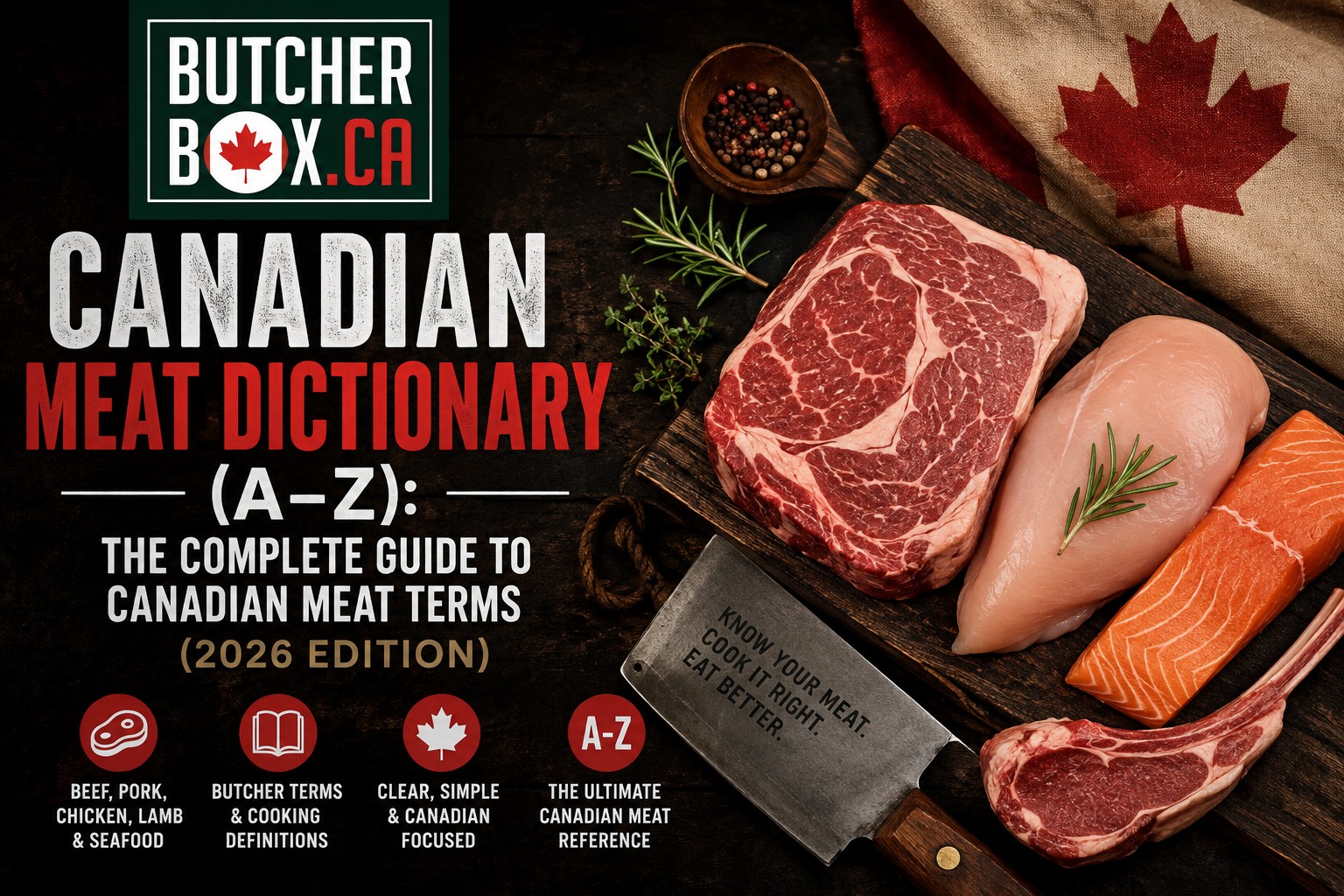
Your ultimate Canadian reference for understanding beef, chicken, pork, lamb, seafood, cooking methods, butchery terms, and meat buying terminology.
Whether you're shopping for premium steaks, preparing Sunday dinner, or learning more about Canadian meat, you've probably encountered unfamiliar words like air-chilled, AAA beef, marbling, striploin, or reverse sear. This Canadian Meat Dictionary explains the most common meat-related terms in plain language, making it easy for home cooks and food lovers to understand exactly what they're buying and how to cook it.
At ButcherBox.ca, we believe informed customers make better cooking decisions. This A–Z dictionary is designed to help Canadians become more confident in the kitchen while choosing premium-quality meat.
A
Aging
The process of allowing beef to rest after processing to improve tenderness and flavour. Beef may be wet-aged or dry-aged before being sold.
A premium processing method where chickens are cooled using cold air rather than water. Air-chilled chicken typically retains more natural flavour, firmer texture, and less added moisture.
A breed of cattle known for excellent marbling and tender beef. Angus is one of Canada's most popular beef breeds.
Meat produced without the routine use of antibiotics. Always check product descriptions, as definitions may vary by producer.
One of Canada's highest beef grades, recognized for excellent marbling, tenderness, and eating quality.
B
Back Ribs
Beef ribs cut from the prime rib section after ribeye steaks are removed.
Blade Roast
A flavourful beef roast from the chuck that becomes tender when slow cooked.
Brisket
A large cut from the breast of the cow that's ideal for smoking, braising, or slow roasting.
Broiler Chicken
A young chicken raised specifically for tender, high-quality meat.
Butcher
A skilled professional who prepares, trims, portions, and recommends meat cuts.
C
Beef produced under Canada's strict food safety and animal welfare standards.
Chuck
A shoulder cut known for rich flavour and excellent slow-cooking performance.
Cross Rib Roast
A lean roast from the shoulder that's perfect for roasting or braising.
The refrigerated transportation process that keeps meat safe from farm to customer.
Cure
A preservation method using salt and seasonings for products like bacon and ham.
D
Dry Aging
A controlled aging process where beef develops deeper flavour while becoming more tender.
The level of cooking inside meat, such as rare, medium-rare, medium, or well done.
The lower portion of a chicken leg, popular for roasting, grilling, and air frying.
E
Eye of Round
A lean roast often sliced thin for roast beef sandwiches or slow-cooked meals.
Extra Lean Ground Beef
Ground beef containing less fat than regular ground beef while remaining flavourful.
F
Farm Raised
Animals raised on farms following Canadian production standards.
A premium steak cut from the tenderloin, prized for exceptional tenderness.
Freezer Burn
Surface dehydration caused by improper freezing. While safe to eat, freezer burn can affect texture and flavour.
G
Grass-Fed Beef
Cattle raised primarily on grass throughout most or all of their lives.
Beef from cattle that continue eating grass until harvest rather than being grain-finished.
Beef that's finely minced for burgers, meatballs, tacos, chili, and countless family recipes.
H
Ham
The hind leg of a pig, often cured, smoked, or roasted.
Hanger Steak
A flavourful steak often called the "butcher's steak."
I
Special packaging designed to maintain safe temperatures during delivery.
J
Jerky
Thin strips of seasoned meat that are dried for long shelf life.
K
Kobe-Style Beef
A marketing term sometimes used outside Japan. Authentic Kobe beef originates from Japan and follows strict certification standards.
L
Meat from sheep under one year of age, known for its tender texture and rich flavour.
Lean
A description indicating relatively low fat content.
Loin
A premium section producing tender cuts like pork chops and striploin steaks.
M
Marbling
Small flecks of fat within muscle that improve tenderness, juiciness, and flavour.
Medium-Rare
A steak cooked to an internal temperature of approximately 54–57°C (130–135°F).
A kitchen tool used to verify safe cooking temperatures.
N
One of Canada's favourite grilling steaks, offering excellent balance between tenderness and beef flavour.
O
Seafood sourced from fisheries committed to sustainability.
Organic Meat
Meat produced according to certified organic farming standards.
P
Porterhouse Steak
A large steak containing both a striploin and tenderloin separated by a T-shaped bone.
A premium roast from the rib section known for abundant marbling.
An essential nutrient supplied by beef, chicken, pork, lamb, and seafood.
Q
Quarter Chicken
A chicken leg attached to part of the thigh, commonly roasted or grilled.
R
One of the most tender and flavourful steaks thanks to abundant marbling.
A larger cut designed for oven cooking.
A cooking method where meat is cooked slowly first and seared at the end for a crisp crust.
S
A versatile steak that's leaner than ribeye while remaining tender.
A premium steak offering excellent flavour with moderate marbling.
Slow Cooking
Cooking at low temperatures over several hours to create tender meat.
T
Tenderloin
The most tender muscle on the animal, producing filet mignon.
The safe process of defrosting frozen meat, ideally in the refrigerator.
U
USDA
The United States Department of Agriculture. While Canadian consumers may see USDA grades, Canada uses its own grading system.
V
Packaging that removes air to help maintain freshness and freezer life.
W
Wagyu
A cattle breed famous for exceptional marbling and rich flavour.
Wet Aging
Aging beef in vacuum-sealed packaging to improve tenderness while preserving moisture.
X
Xanthophyll
Natural pigments found in animal feed that can influence the colour of poultry fat and egg yolks.
Y
Yield Grade
A measurement estimating how much usable meat a carcass will produce.
Z
Zinc
An important mineral naturally found in beef, lamb, and pork that supports immune function.
What is AAA beef?
AAA is one of Canada's highest beef grades and indicates excellent marbling, tenderness, and eating quality.
What is the difference between grass-fed and grass-finished?
Grass-fed refers to cattle raised on grass for much of their lives, while grass-finished means they continue eating grass until harvest.
Why is air-chilled chicken considered premium?
Because it isn't cooled in large water baths, air-chilled chicken generally retains more natural flavour, firmer texture, and less added moisture.
What is marbling?
Marbling is the fine intramuscular fat that helps create juicy, flavourful steaks.
Why should I use a meat thermometer?
It helps ensure meat reaches a safe internal temperature while preventing overcooking.
What's the difference between ribeye and striploin?
Ribeye contains more marbling and richer flavour, while striploin is slightly leaner with a firmer texture.
How long can frozen meat be stored?
Properly vacuum-sealed meat can maintain quality for many months in a freezer, though recommended storage times vary by cut.
Is Canadian beef different from American beef?
Canada has its own grading system and strict food safety regulations, producing consistently high-quality beef.
Why does vacuum sealing matter?
Removing air helps preserve freshness, reduce freezer burn, and extend storage life.
Where can I buy premium Canadian meat online?
ButcherBox.ca offers a wide selection of premium Canadian beef, chicken, pork, lamb, and seafood delivered directly to customers across Ontario.
Continue Learning
Expand your knowledge with these additional resources from ButcherBox.ca:
- Canadian Meat Learning Hub
- Canadian Beef Encyclopedia
- Canadian Chicken Encyclopedia
- Canadian Pork Encyclopedia
- Canadian Seafood Encyclopedia
- Canadian Air Fryer Encyclopedia
- Behind Every ButcherBox.ca delivery
- Most Popular Canadian Meats
- Canadian Recipe Guide
- Meal Prep Guide
Whether you're a beginner or an experienced home cook, understanding meat terminology helps you shop smarter, cook with confidence, and enjoy consistently delicious meals. Bookmark this Canadian Meat Dictionary as your go-to reference whenever you encounter an unfamiliar meat term or cooking technique.