
Canadian Pork Encyclopedia (2026 Edition): The Ultimate Canadian Guide to Pork Cuts, Cooking, Nutrition & Buying Pork Online
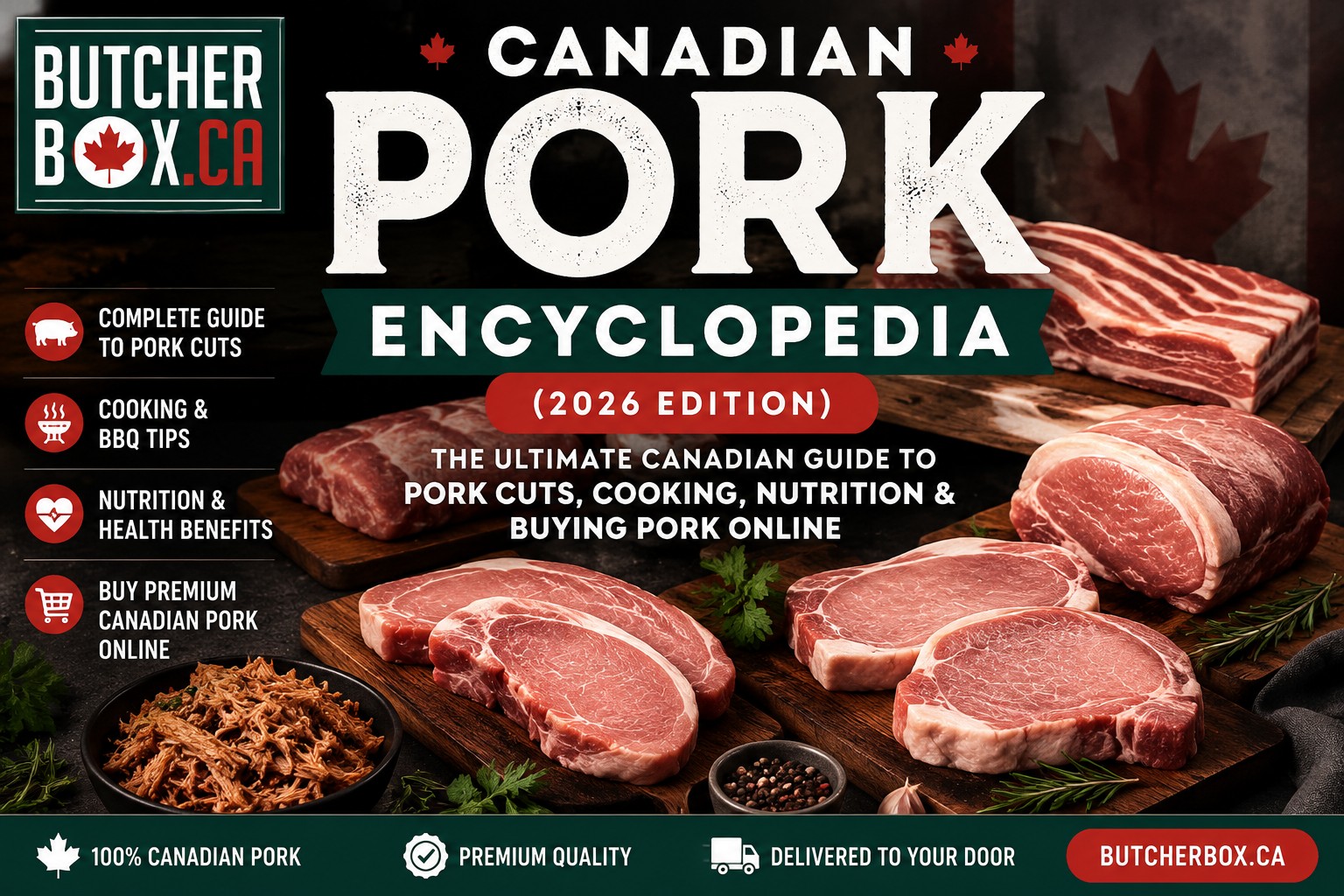
Whether you're preparing juicy pork chops for the BBQ, slow-smoking a pork shoulder, roasting a pork loin, or making crispy bacon for breakfast, pork remains one of Canada's most versatile and delicious proteins.
This Canadian Pork Encyclopedia (2026 Edition) is your complete guide to everything you need to know about pork—from understanding different cuts and cooking methods to food safety, nutrition, storage, and choosing premium Canadian pork.
At ButcherBox.ca, we proudly source premium Canadian meats, making it easy to enjoy restaurant-quality pork delivered directly to your door.
Table of Contents
- What is Canadian Pork?
- Why Canadian Pork is World-Class
- Pork Grading in Canada
- Complete Guide to Pork Cuts
- Best Pork Cuts for BBQ
- Best Pork Cuts for Slow Cooking
- Best Pork Cuts for Roasting
- Internal Cooking Temperatures
- Pork Nutrition
- Pork Storage Guide
- Freezing Pork
- Thawing Pork Safely
- Pork Marinades
- Pork Seasonings
- Pork Cooking Methods
- Frequently Asked Questions
- Buy Premium Pork Online in Canada
Canadian pork comes from hogs raised under strict food safety, animal care, and quality standards. Canada is recognized worldwide for producing high-quality pork that is exported to more than 100 countries.
Canadian pork is prized for its:
- consistent marbling
- tenderness
- mild flavour
- versatility
- excellent value
Whether grilled, roasted, smoked, braised, or pan-fried, pork adapts beautifully to almost every cooking style.
Why Canadians Love Pork
Pork is one of Canada's favourite proteins because it offers:
- incredible flavour
- affordable pricing
- lean protein
- easy meal preparation
- excellent BBQ performance
- family-friendly recipes
- versatility for every season
From weekend smokers to quick weekday dinners, pork fits every lifestyle.
Canadian Pork Cuts Explained
The most tender cut.
Best for:
- roasting
- grilling
- pan searing
- medallions
Cooking Time
20–30 minutes
Lean and versatile.
Perfect for:
- Sunday roasts
- sliced pork
- stuffing
- meal prep
Pork Shoulder (Boston Butt)
Rich in connective tissue.
Ideal for:
- pulled pork
- smoking
- braising
- carnitas
Low-and-slow cooking transforms it into tender, flavourful meat.
Picnic Shoulder
Excellent for:
- smoking
- roasting
- slow cooking
Usually more economical than Boston Butt.
Pork Belly
Known for:
- bacon
- burnt ends
- crispy skin
- Asian-style dishes
High fat content creates incredible flavour.
Available as:
- Rib Chop
- Centre Cut
- Sirloin Chop
- Blade Chop
Perfect for:
- grilling
- frying
- baking
Baby Back Ribs
Tender ribs from the loin.
Best cooked:
- low and slow
- smoked
- grilled
Side Ribs (Spare Ribs)
Larger and meatier than baby backs.
Excellent for smoking and BBQ competitions.
Ham
A cured pork leg commonly enjoyed during holidays but delicious year-round.
One of Canada's most popular pork products.
Perfect for:
- breakfast
- burgers
- sandwiches
- salads
- appetizers
Excellent grilling choices include:
- Pork Chops
- Pork Tenderloin
- Baby Back Ribs
- Side Ribs
- Pork Belly
- Sausages
Best Pork Cuts for Smoking
Smoking favourites include:
- Pork Shoulder
- Pork Belly
- Ribs
- Ham
Popular wood choices:
- Apple
- Cherry
- Hickory
- Maple
- Oak
Best Pork Cuts for Slow Cooking
Perfect choices:
- Pork Shoulder
- Picnic Shoulder
- Country Style Ribs
- Pork Cheeks
|
Cut |
|
|
Pork Chops |
63°C (145°F) + Rest |
|
Pork Tenderloin |
63°C (145°F) |
|
63°C (145°F) |
|
|
Pulled Pork |
93–96°C (200–205°F) |
|
Ham (Fully Cooked) |
60°C (140°F) |
|
Fresh Ham |
63°C (145°F) |
Always allow pork to rest for at least 3 minutes after reaching the target temperature.
Pork Nutrition
A typical 100 g serving of lean pork provides approximately:
- 26 g protein
- 5–12 g fat (depending on the cut)
- Iron
- Zinc
- Selenium
- Vitamin B12
- Niacin
- Phosphorus
Pork is an excellent source of complete protein and essential vitamins.
Fresh pork:
Refrigerator:
3–5 days
Ground pork:
1–2 days
Cooked pork:
3–4 days
Always refrigerate below 4°C (40°F).
Freezing Pork
Properly wrapped pork can remain high quality for:
- Chops – 4–6 months
- Tenderloin – 6–8 months
- Roasts – up to 12 months
- Ground pork – 3–4 months
Vacuum sealing significantly extends freezer quality.
Always thaw using one of these methods:
✔ Refrigerator
✔ Cold water
✔ Microwave (cook immediately afterward)
Never thaw pork on the kitchen counter.
Best Pork Marinades
Popular flavour combinations include:
- Maple Dijon
- Garlic Herb
- Honey Garlic
- Apple Cider
- BBQ
- Teriyaki
- Smoky Chipotle
- Lemon Herb
Marinating for 2–24 hours enhances flavour and tenderness.
Best Seasonings for Pork
Classic combinations:
- Garlic
- Black Pepper
- Paprika
- Rosemary
- Thyme
- Sage
- Brown Sugar
- Mustard Powder
- Onion Powder
- Sea Salt
Popular Cooking Methods
Excellent for:
- chops
- ribs
- tenderloin
Smoking
Best for:
- shoulder
- belly
- ribs
Oven Roasting
Ideal for:
- loin
- tenderloin
- ham
Slow Cooker
Perfect for:
Creates an outstanding crust on pork chops and tenderloin.
Is pork healthy?
Yes. Lean pork is high in protein and rich in vitamins and minerals, making it a nutritious choice as part of a balanced diet.
What temperature should pork be cooked to?
Most whole cuts should reach an internal temperature of 63°C (145°F) followed by a three-minute rest. Pulled pork is typically cooked to 93–96°C (200–205°F) for a tender, shreddable texture.
What's the difference between pork loin and pork tenderloin?
Pork loin is a larger, wider roast suitable for slicing, while pork tenderloin is a smaller, exceptionally tender muscle that cooks much faster.
Which pork cut is best for pulled pork?
Pork shoulder (Boston Butt) is the preferred cut because of its fat and connective tissue, which break down during slow cooking.
Are baby back ribs better than spare ribs?
Baby back ribs are leaner and more tender. Spare ribs are larger, meatier, and have a richer flavour, making both excellent choices depending on your preference.
Can I freeze fresh pork?
Yes. Vacuum-sealed pork freezes very well and maintains quality for several months when stored properly.
What wood is best for smoking pork?
Apple, cherry, maple, hickory, and oak are all popular choices that complement pork's natural sweetness.
Why should I use a meat thermometer?
A digital meat thermometer is the most reliable way to ensure pork is cooked safely without overcooking, helping retain moisture and flavour.
Buy Premium Canadian Pork Online
When you purchase pork from ButcherBox.ca, you're choosing premium-quality Canadian meat delivered directly to your home. Convenient online ordering, carefully selected products, and reliable cold-chain delivery make it easy to enjoy delicious pork for everyday meals, weekend BBQs, and special occasions.
Browse the full selection of premium Canadian meats at:
Strengthen your site's topical authority by linking this article to related cornerstone content, including:
- The Ultimate Canadian Beef Encyclopedia (2026 Edition)
- Canadian Chicken Encyclopedia (2026 Edition)
- Canadian BBQ Encyclopedia (2026 Edition)
- The Complete Canadian Meal Prep Meat Guide (2026 Edition)
- Canadian Meat Safety & Storage Guide
- The Ultimate Canadian Cooking Tips Guide
- Ontario Meat Delivery Guide
- Grass-Fed Beef Guide
- Air-Chilled Chicken Guide
- Canadian Meat Cuts