How to Cook Steak in a Cast Iron Skillet: The Ultimate Guide to Steakhouse Results at Home
Why Cook Steak in a Cast Iron Skillet?
When it comes to achieving restaurant-quality steak at home, few methods can match the results of a cast iron skillet. Cast iron retains heat exceptionally well, creating the high temperatures needed to develop a rich, flavourful crust while keeping the interior tender and juicy.
Whether you're cooking a Ribeye, Striploin, or Filet Mignon, a cast iron skillet allows for precise control and consistent results.
Best Steaks for Cast Iron Cooking
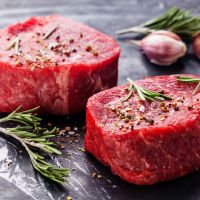
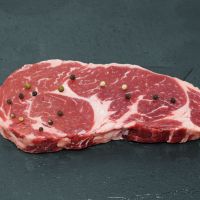
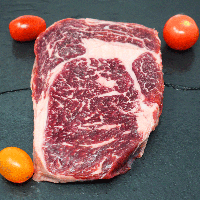
Nearly any premium steak works well in cast iron, but these cuts are particularly well-suited:
Look for steaks that are at least 1 to 1½ inches thick for optimal results.
What You'll Need
- 1 premium steak
- 1 tablespoon high smoke-point oil (avocado oil or canola oil)
- Kosher salt
- Freshly cracked black pepper
- 2 tablespoons butter
- 2 garlic cloves
- Fresh rosemary or thyme
- Cast iron skillet
- Instant-read thermometer
Step 1: Bring the Steak to Room Temperature
Remove your steak from the refrigerator 30 to 45 minutes before cooking.
Pat the steak dry with paper towels and season generously with salt and pepper on all sides.
Dry surfaces create better browning and a superior crust.
Step 2: Preheat the Cast Iron Skillet
Place your cast iron skillet over high heat.
Allow it to heat for 5 to 7 minutes until it is extremely hot. A properly heated skillet is critical for achieving a steakhouse-quality sear.
Add your oil just before placing the steak into the pan.
Step 3: Sear the Steak
Carefully place the steak into the skillet.
Cook without moving it for:
- 3–4 minutes for thinner steaks
- 4–5 minutes for thicker steaks
Flip once and repeat on the second side.
Avoid pressing down on the steak, as this releases valuable juices.
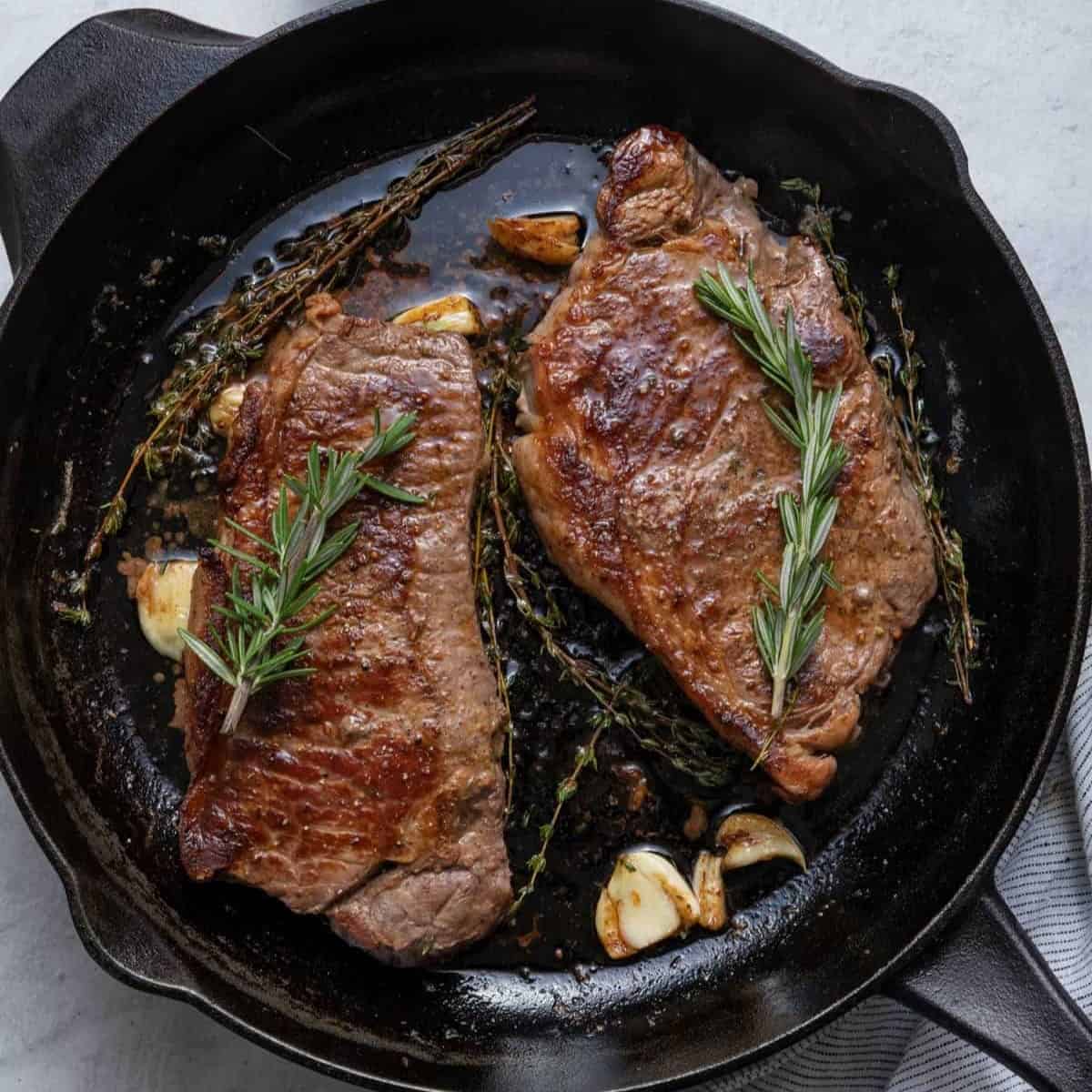
Step 4: Add Butter and Aromatics
Reduce heat slightly.
Add:
- Butter
- Garlic cloves
- Rosemary or thyme
Tilt the skillet and spoon the melted butter continuously over the steak for 1–2 minutes.
This technique, known as basting, adds flavour while promoting even cooking.
Step 5: Check Internal Temperature
For best results, remove the steak when it reaches:
|
Doneness |
Remove at |
Final Temperature |
|
Rare |
49°C |
52°C |
|
Medium Rare |
54°C |
57°C |
|
Medium |
60°C |
63°C |
|
Medium Well |
65°C |
68°C |
|
Well Done |
71°C |
74°C |
Temperatures will continue to rise while resting.
Step 6: Rest Before Serving
Transfer the steak to a cutting board.
Allow it to rest for 5 to 10 minutes before slicing.
Resting redistributes juices throughout the meat, resulting in a more tender and flavourful steak.
Common Mistakes to Avoid
Using a Cold Pan
A hot skillet is essential for creating a proper crust.
Skipping the Rest
Cutting too early causes juices to run out.
Overcrowding the Pan
Cook one or two steaks at a time to maintain high heat.
Not Using a Thermometer
An instant-read thermometer removes guesswork and ensures perfect doneness.
What to Serve with Cast Iron Steak
Pair your steak with:
- Roasted Potatoes
- Loaded mashed potatoes
- Bacon green beans
- Caesar salad
- Sautéed spinach
- Chimichurri sauce
Frequently Asked Questions
Can I cook steak entirely in a cast iron skillet?
Yes. For steaks up to 1½ inches thick, a cast iron skillet alone can produce exceptional results.
What oil is best for searing steak?
Use oils with high smoke points such as avocado oil, canola oil, or grapeseed oil.
How long should I cook a steak in a cast iron skillet?
Cooking time depends on thickness and desired doneness, but most steaks require 3–5 minutes per side.
Final Thoughts
Learning how to cook steak in a cast iron skillet is one of the easiest ways to elevate your home cooking. With a quality steak, proper seasoning, and a hot cast iron pan, you can create steakhouse-quality results any night of the week.
For the best results, start with premium Canadian beef sourced from trusted farms and prepared with care from ButcherBox.ca